


The decision is made: you’re going to Ghana! You will soon be visiting one of the friendliest and safest countries in Africa. Now, only one question remains: how will you get around? Will you look for a car rental in Ghana with a professional driver, consider self-driving, or opt for the adventure of public transport?
In this blog, we dive into the reality of transportation and the crucial choice of whether or not to drive yourself. Because let’s be honest: when Ghanaians, travelers, and even we talk about how safe Ghana is, we often forget one vital part: the traffic.
Is traffic in Ghana safe? Not always. Don’t worry—I’ve laid out the facts, the risks, and the solutions so you can hit the road with peace of mind.
Want to know more about traveling via public transport? Read my guide on Public Transport in Ghana:
Travelling with BWO
Our chauffeur service is part of the travel activities of Banko Women Organization. With BWO, we combine sustainable tourism with our mission to create opportunities for women in Banko through education, skills training and employment.
By travelling with BWO, you combine your trip through Ghana with local employment while also supporting our community-based projects.
The Reality of Ghanaian Traffic: What You Need to Know
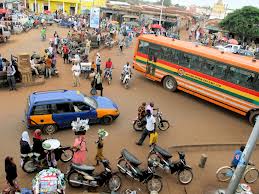
Traffic rules in Ghana are likely very different from what you are used to back home. It’s not just about what is written on the signs; it’s about the unwritten rules and the constant interaction with other road users. In Ghana, the horn is perhaps the most essential part of the car—used more for communication than for frustration.
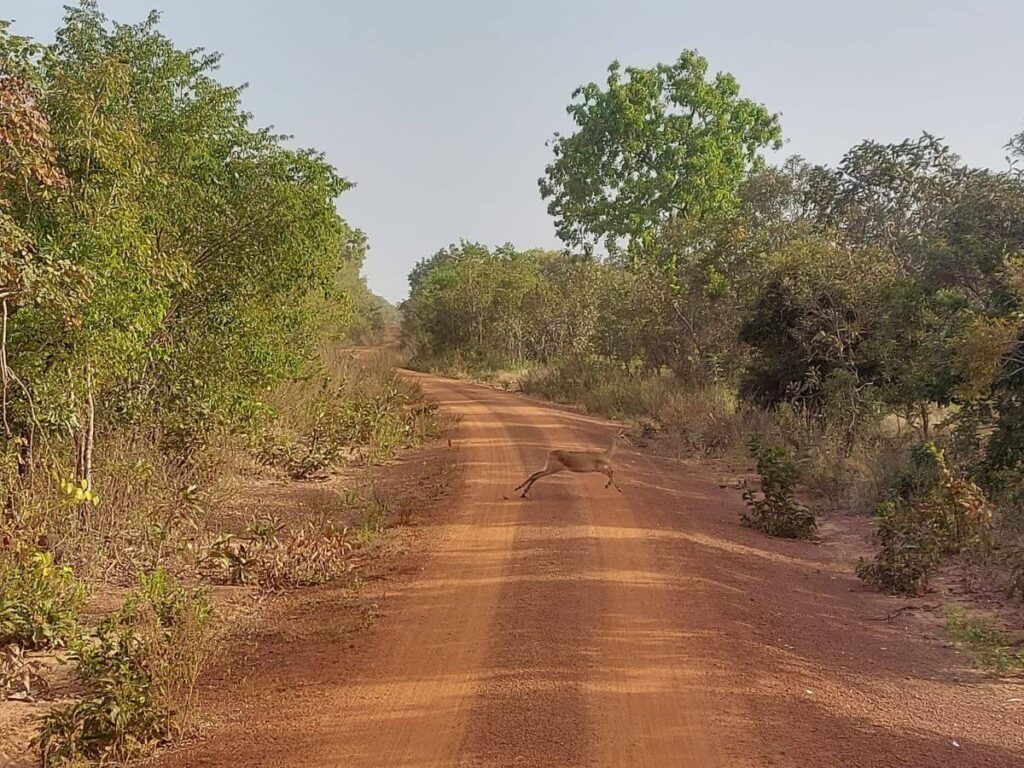
Driving here means being constantly alert. You have to navigate deep potholes, avoid goats suddenly crossing the road, and anticipate the unpredictable moves of fellow drivers. And then there are the tropical downpours: a sudden, heavy Ghanaian rainstorm can turn a road into a challenge within minutes. It is a dynamic environment that requires local experience and “road-sense.”
Why we recommend a car with a driver
Driving in Ghana is different from driving in Europe. Traffic can be chaotic, roads are not always in good condition and unexpected situations are common. Many people also overestimate their driving skills. Being a confident driver at home does not necessarily mean you are prepared for driving in Ghana.
Over the years, we have unfortunately seen several situations where travellers driving themselves were involved in accidents. Two accidents in particular have stayed with us. Thankfully, both ended relatively well, but they were a clear reminder of how quickly things can go wrong on Ghanaian roads.
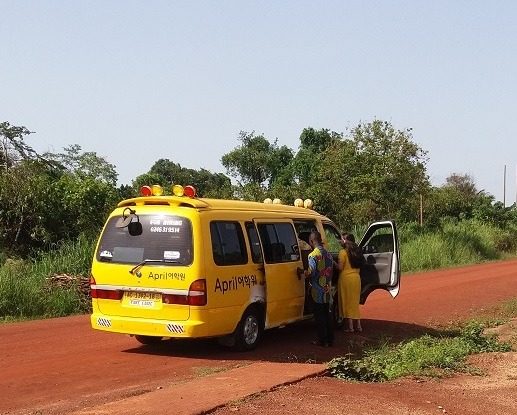
That is why we recommend that most travellers explore Ghana with an experienced driver. Not because self-drive is impossible, but because as a visitor, you simply do not have the same experience with the traffic, roads and unexpected situations as someone who drives here every day.
With a driver, you do not have to worry about the traffic or the route. You can relax, enjoy the scenery and stop along the way whenever you see something interesting. This can make a big difference, especially when you are visiting several destinations or travelling longer distances.
When is Self-Drive Actually an Option?
While I highly recommend hiring a professional driver, there are situations where you might choose to drive yourself. However, this is only a wise decision if you meet the following criteria:
- Extensive experience in the Global South: If you have already navigated the traffic of countries like Tanzania, India, or Vietnam, you won’t be as easily overwhelmed by Ghana’s road dynamics. You are used to sudden maneuvers and know how to anticipate drivers who interpret traffic rules differently than you might.
- Technical road-sense: You don’t just know how to steer; you understand how to handle a vehicle on roads that push the engine and tires to their absolute limits.
- Traveling outside major cities: Driving becomes significantly more relaxed once you leave the urban sprawl of Accra or Kumasi. On connecting roads between villages, there is more space—though you must always remain alert for deep potholes, livestock crossing, or oncoming vehicles overtaking in your lane.
- A solid backup plan: You are renting from a company that provides comprehensive insurance and reliable 24/7 roadside assistance specifically for self-drive clients.
Even if you are a highly experienced driver, ask yourself: is the small financial saving worth the full responsibility of a rental car in a country where an accident can happen in the blink of an eye?
Don’t Forget Your Paperwork
Should you decide to get behind the wheel, remember that your national driver’s license alone is often not enough. You will need an International Driving Permit (IDP) to drive legally in Ghana.
The Pitfalls of “Cheap Can Be Expensive”
Naturally, you want the best price; why would you pay more than necessary? I completely agree. However, in Ghanaian traffic, some methods of cutting costs are simply not practical—or even dangerous. There are three common strategies that travelers often try:
- Using Bolt or Uber for long distances: These apps work fantastically within the city, but the cars are often not suited for long journeys on challenging roads. Furthermore, these drivers are not trained for hours of driving outside the city limits.
- “I know someone with a car”: A friendly neighbor or an acquaintance of your host family might offer to drive you, but are they insured for commercial passenger transport? And what is the backup plan if the car breaks down in the middle of the jungle?
- Hiring a standard city taxi: City taxis are not built for the potholes and dirt roads of the interior. To keep prices low, maintenance on essential components like tires and brakes is often skipped.
Why a Fair Price Pays Off
When you hire a professional driver for a fair price, you are paying for much more than just a ride from A to B. You are investing in:
- Accountability: Someone who is committed to maintaining their reputation and business.
- A well-rested driver: Someone who doesn’t need to drive 18 hours a day just to make ends meet, but stays fresh and sharp behind the wheel.
- Maintenance: A vehicle that has been technically inspected and is fully capable of handling the heavy Ghanian roads.
Maximum Freedom: A Dedicated Partner for Your Journey
What travelers often appreciate most is the peace of mind a dedicated driver brings. Unlike one-off rides or apps, the driver stays nearby throughout your entire trip.
This provides immense freedom: you can go wherever you want, at the times that suit you best. Even if you stay in the same location for several days—Kumasi, for example—the driver remains fully available to you. He won’t take on other jobs in between, so he is ready the moment you want to visit that one nice market or a hidden waterfall.
Many guests find that arranging individual rides over and over again often ends up being more expensive and far more stressful. Additionally, with changing drivers, you never know exactly what kind of driving style or vehicle condition you’re going to get. With a fixed driver, you choose comfort and certainty from the first mile to the last.
Honesty Matters: Breakdowns Can Happen
Does hiring a reliable car and driver guarantee a 100% flawless journey? No, I would never promise that. The conditions in Ghana are tough on vehicles. The heat, the dust, and the challenging road surfaces push cars to their absolute limits. Even the best-maintained vehicle can suffer a flat tire or a mechanical issue.
Furthermore, drivers are only human. While a professional driver practices defensive driving and minimizes risks, they cannot control the mistakes made by other road users.
The Real Difference
The difference between a reputable provider and the cheapest “budget” option only becomes clear when things go wrong:
- In case of a breakdown: A professional organization will quickly arrange a replacement vehicle or a repair so your journey can continue. With a “budget” alternative, you might find yourself waiting by the side of the road for hours (or even days).
- In case of an incident: A professional driver knows exactly who to call, stays calm, and ensures that your safety remains the top priority.
You aren’t paying for a “no-breakdown guarantee”; you are paying for the safety net that catches you when things don’t go as planned.

What is a Fair Price for Car Rental in Ghana?
You will undoubtedly find cheaper offers in Ghana, but it is essential to understand what a fair price actually covers. When renting a car with a driver, you aren’t paying for luxury—you are paying for safety and reliability.
A fair price ensures that:
- Maintenance is a priority: Brakes and tires are kept in condition to handle the local roads.
- Proper insurance: The vehicle is correctly insured for commercial passenger transport.
- A well-rested driver: This is perhaps the most important factor. A fatigued driver, forced to work excessive hours to compensate for a low rate, is the single greatest risk on the road. A fair price allows the driver to stay sharp and focused.
Transparency in Our Pricing
I am often asked what a realistic price is for a road trip in Ghana. For our passenger cars on multi-day journeys, we maintain a rate between 2200 and 2500 GHS per day.
Traveling with a group of more than 3 people? Please contact me; I will gladly arrange a larger vehicle for you through one of our trusted partners.
The exact price depends on several factors:
- The total length of the trip.
- The specific route we will be taking.
- The daily mileage (distance covered per day).
- Start and end locations: For example, starting in Accra and ending in Cape Coast, or traveling all the way to the North.
Please note: Different rates apply for individual pick-ups and drop-offs (such as an airport transfer or a simple one-way trip between two cities). Always request a personalized quote for these services.
What is included?
Our daily rates are all-inclusive. This means you pay for the vehicle, the fuel, and all costs for the driver (including his accommodation and meals). There are no hidden fees or unexpected costs afterward.
Our Working Hours & Safety
Our drivers generally work between 06:00 AM and 06:00 PM. This does not mean they are behind the wheel for twelve consecutive hours; we plan sufficient rest breaks so the driver remains sharp and focused.
Furthermore, we do not drive after dark. This is one of our most important safety rules to ensure you arrive at your destination safely.
What to Look for When Renting a Car?
Whether you travel with us or arrange a vehicle elsewhere, make sure you always check these four points. Safety is in the details:
- Are there working seatbelts (including the back seat)? In many Ghanaian taxis and older cars, rear seatbelts are often missing. In the event of an emergency stop or an accident, these are life-saving.
- Is the car equipped with functional air conditioning? This might seem like a luxury, but in the Ghanaian heat, it is a safety essential. A cool car ensures the driver remains sharp, alert, and less fatigued during long journeys.
- Does the driver speak fluent English? Clear communication is vital, especially in unexpected situations or at police checkpoints. It’s important that you can give instructions easily or ask questions about your surroundings.
- Does the driver know the region you are visiting? Roads in Ghana change constantly. A driver familiar with the specific route knows where the dangerous potholes are, where to find reliable fuel stations, and which roads to avoid during the rainy season.
Enjoy Ghana, Without the Traffic Stress
Ghana is a beautiful country that is best experienced with your eyes on the scenery, not on the hazards in the road. By choosing a reliable car with an experienced driver, you are choosing a worry-free holiday while supporting fair wages and road safety.
Whether you travel with us or arrange a vehicle elsewhere, make sure you always check these four points. Safety is in the details:
- Are there working seatbelts (including the back seat)? In many Ghanaian taxis and older cars, rear seatbelts are often missing. In the event of an emergency stop or an accident, these are life-saving.
- Is the car equipped with functional air conditioning? This might seem like a luxury, but in the Ghanaian heat, it is a safety essential. A cool car ensures the driver remains sharp, alert, and less fatigued during long journeys.
- Does the driver speak fluent English? Clear communication is vital, especially in unexpected situations or at police checkpoints. It’s important that you can give instructions easily or ask questions about your surroundings.
- Does the driver know the region you are visiting? Roads in Ghana change constantly. A driver familiar with the specific route knows where the dangerous potholes are, where to find reliable fuel stations, and which roads to avoid during the rainy season.
Enjoy Ghana without the driving stress
Ghana is a wonderful country to explore. With a reliable car and an experienced driver, you can travel comfortably and enjoy the scenery, culture and places you visit along the way.
At the same time, your trip helps create local employment through Banko Women Organization.
Would you like to travel through Ghana with BWO? Get in touch and tell us about your travel plans.
Are you ready to plan the rest of your trip?
Besides arranging your transport, there is much more to a good preparation. Think about your visa, booking the right flights, and how to stay connected to the internet while you’re there.
Read my complete guide here:





0 Comments